

Experts across scientific fields will convene at Hood College in Frederick, MD, from June 16–18 for the fourth Life Sciences Symposium, aiming to ameliorate the so-called “reproducibility crisis” in research.
Reproducibility in Science 2026: Elevating Standards to Strengthen Research is hosted by Hood College and Frederick National Laboratory for Cancer Research (FNLCR). The three-day symposium is intended to devise and drive solutions to reproducibility issues in biomedical sciences. Registration and attendance are free.
“Reproducibility” refers to scientists’ ability to replicate other scientists’ published studies, a key step in validating findings. Due to several factors—often material or procedural—there has been a substantial inability to reproduce some studies. This has led to retractions and decreased public trust in science, what some have dubbed the “reproducibility crisis.”
In addition to attending lectures, participants at the symposium will contribute to working groups tasked with proposing standards and processes to enhance reproducibility in specific research areas, such as antibody characterization and AI science.
“The hope is that we can brainstorm and actually try to influence these specific areas with workable, constructive solutions,” said Leonard Freedman, Ph.D., FNLCR chief science officer.
For example, consensus-based standards and reference materials, if adopted by the scientific community, could lessen reproducibility issues and increase returns on research-funding investments. That’s the symposium’s broader purpose, according to Freedman.
Multidisciplinary Push for Solutions
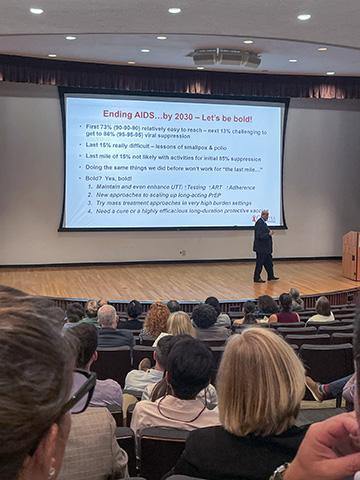
This year’s Life Sciences Symposium is the latest in a growing field of meetings devoted to reproducibility. However, its approach, which combines a broadly focused plenary session with narrowly focused panels and working groups, is distinct.
“There’s so much value in sitting there and listening, but there’s also a lot of value in getting [participants’] input and getting them involved in the solution, because that’s ultimately the goal,” said Victoria Brun, partnership project manager in the FNLCR Partnership Development Office and a member of the event coordinating committee.
This approach dovetails with the National Institutes of Health’s initiative to improve replication and reproducibility. Both are community-based efforts.
The symposium’s panelists and speakers run the gamut of scientific stakeholders, from scientists in academia, government, and industry, to the editors of esteemed publications. By involving participants who see different facets of the problem, the symposium’s planning committee hopes to encourage holistic solutions.
“These are really, really complex issues, and they have many layers, and each person who’s involved in a field of research … has areas where they primarily focus their attention, but there are other important aspects that they might not think about as often or be as aware of,” said Nathan Coussens, Ph.D., planning committee member and scientific director of FNLCR’s Molecular Pharmacology Laboratory.
The working groups will strive to produce white papers or position papers that can be published and disseminated as guidance documents within the biomedical science community. Planners anticipate the full impact of these outcomes will unfold over the next few years—a foundation on which others can build.
Continuing a History of Excellence
For years, FNLCR has advocated for reproducibility efforts and scientific standards through its Scientific Standards Hub, a collaboration between numerous FNLCR scientists to make protocols and tools available to researchers elsewhere.
Through the Hub, FNLCR has previously hosted smaller reproducibility conferences dedicated to individual fields. Those efforts culminate in this year’s multidisciplinary Life Sciences Symposium.
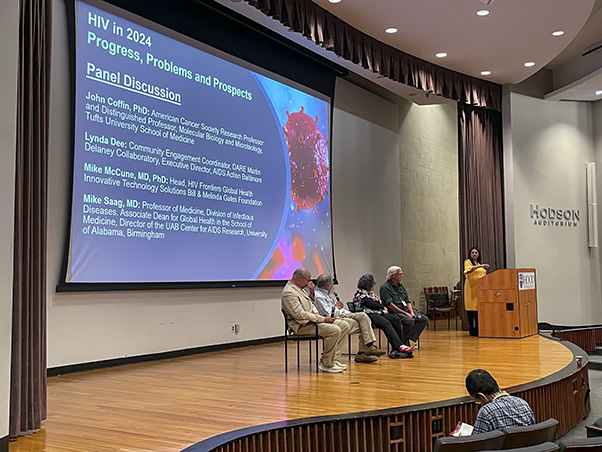
The Hood College – FNLCR Life Sciences Symposia are themselves a callback to the Annual Meeting on Oncogenes, held at Hood College from 1985–1997, then alternating between Hood and the Salk Institute in La Jolla, CA, from 1998–2004.
The National Cancer Institute, with FNLCR’s forerunners, sponsored the oncogene meeting. It was a similarly cross-sectional event. Widely anticipated each year, it drew nearly 600 attendees—including multiple Nobel laureates—from various fields and 20 countries at its height. Even today, scientists reminisce about those meetings and the research they showcased.
FNLCR and Hood College partnered to host the first Life Sciences Symposium in 2019, rekindling an old relationship to foster scientific excellence.
Interested parties can register to attend on the Hood College website.
Samuel Lopez leads the editorial team in Scientific Publications, Graphics & Media (SPGM). He writes for newsletters; informally serves as an institutional historian; and edits scientific manuscripts, corporate documents, and sundry other written media. SPGM is the creative services department and hub for editing, illustration, graphic design, formatting, and multimedia.