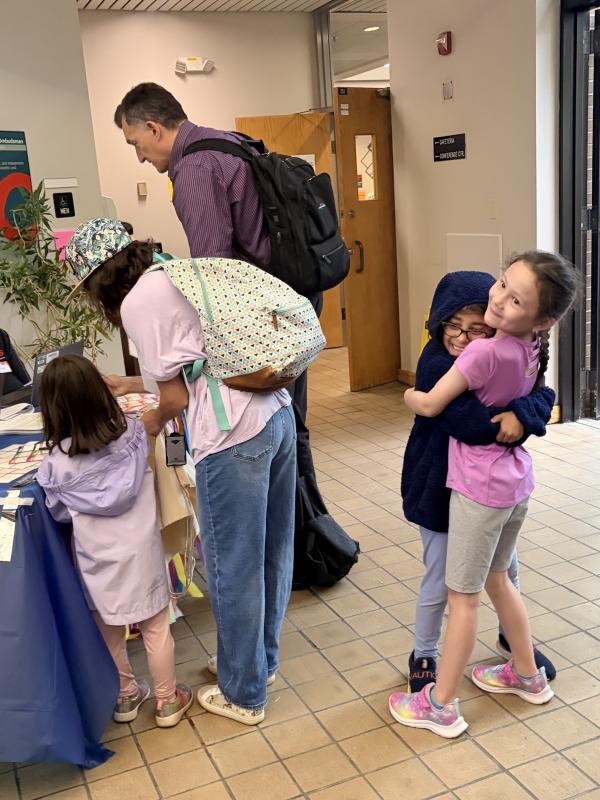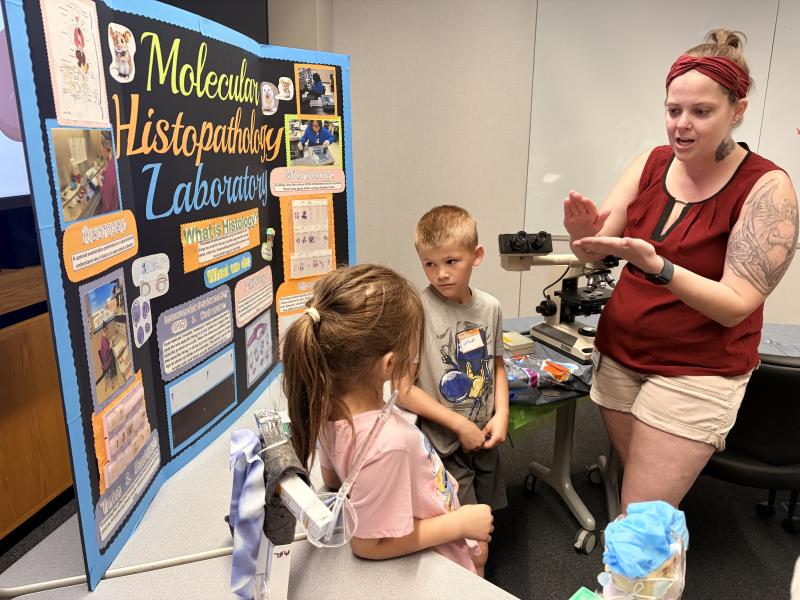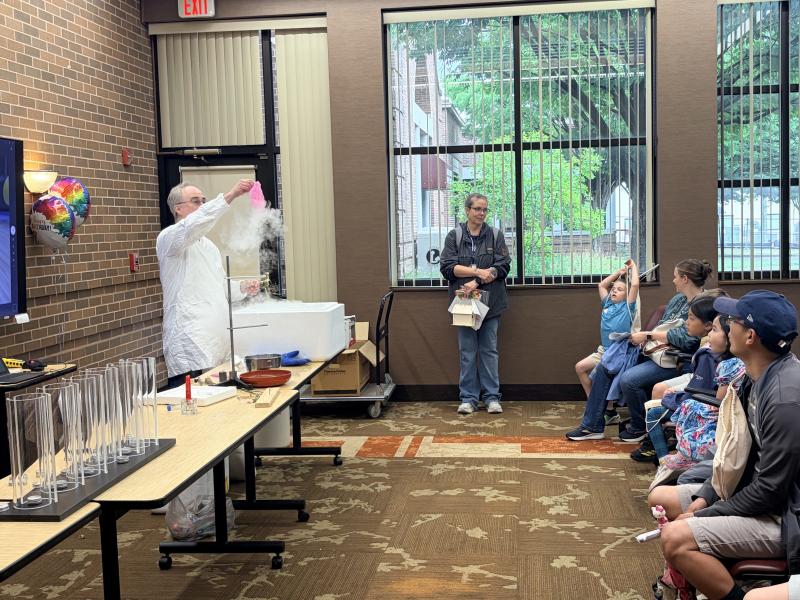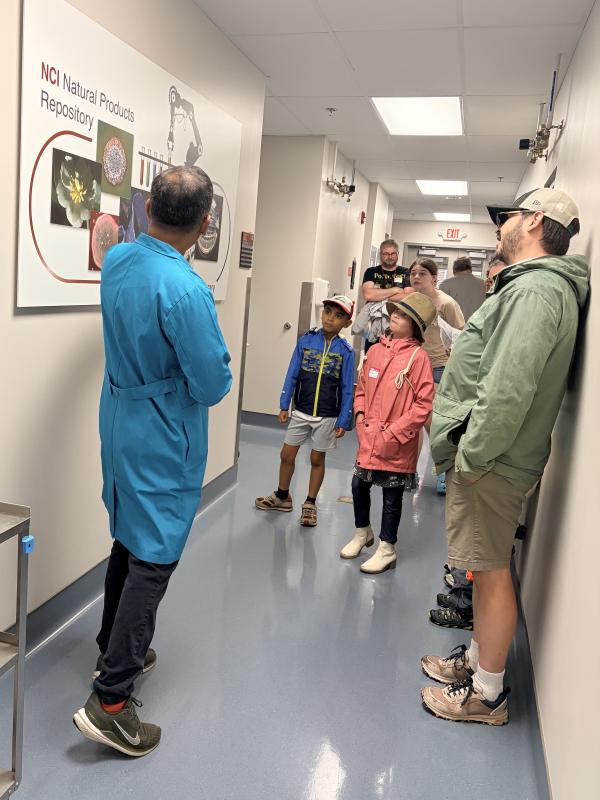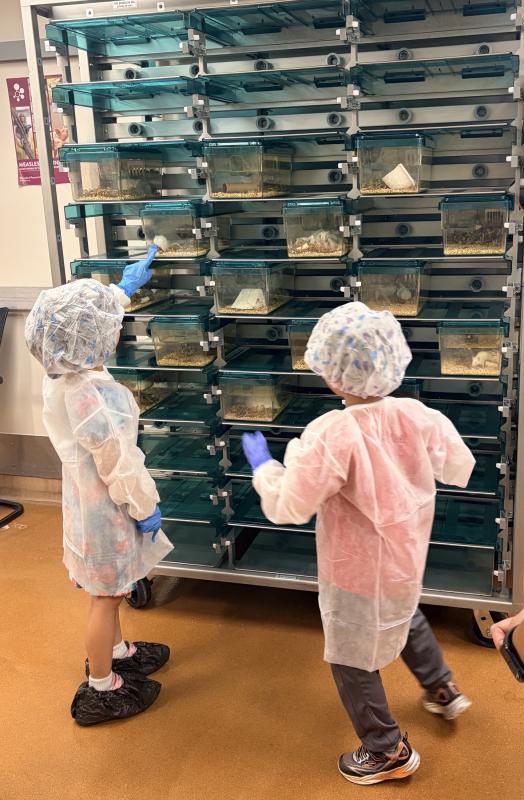



Squeals of delight and excited laughter carried through the halls as you approached the former NCI Frederick Scientific Library on June 23. The space was once again filled with scientific inquiry—but not the quiet, contemplative kind. Instead, it played host to this year’s Take Your Child to Work Day.
This year, the planning committee held most activities in Building 549, with only a few satellite activities in labs around campus, in a drop-in format rather than specific time slots. Participants reported appreciating the convenience of the new event structure.
A New Format for Easier Planning and More Enjoyment
Most of the day’s activities followed a drop-in format so kids and their guardians could move from station to station at their leisure. Participants could see what they wanted without working through a jigsaw puzzle of event times first. In previous years, students registered for a limited number of scheduled programs and filled out the remainder of their day with a few drop-in activities.
“This [new format] allowed children and chaperones to choose activities based on personal interest and to have more flexibility in their day,” said Julia Bakhru, a program analyst in NCI Frederick’s Office of Scientific Operations who organized this year’s event. “Based on the feedback I’ve received from our survey [after the event], the consensus was the new format worked very well and was well received.”
The centrally located activities made it easier to work around the day’s rainy weather. Tarps were laid down indoors, and some activities meant for outside were moved into the old library space. The atmosphere was festive, like an indoor fair.
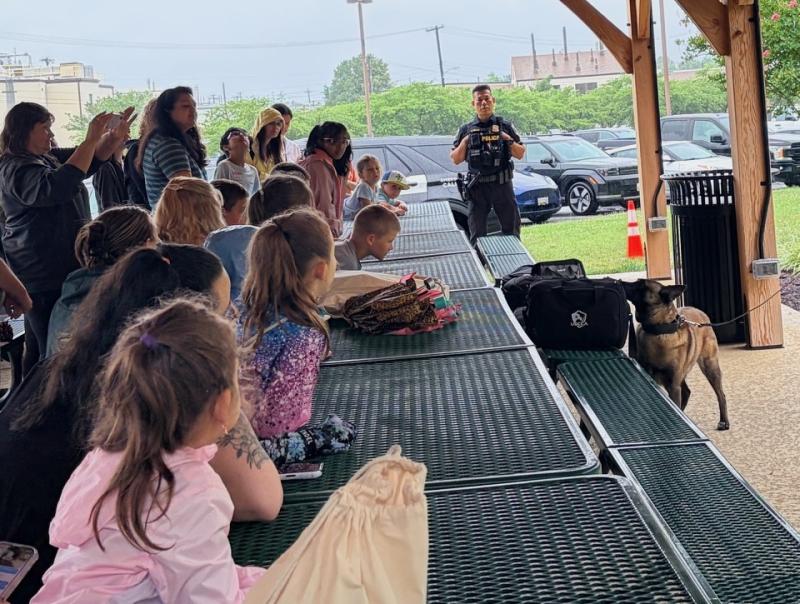
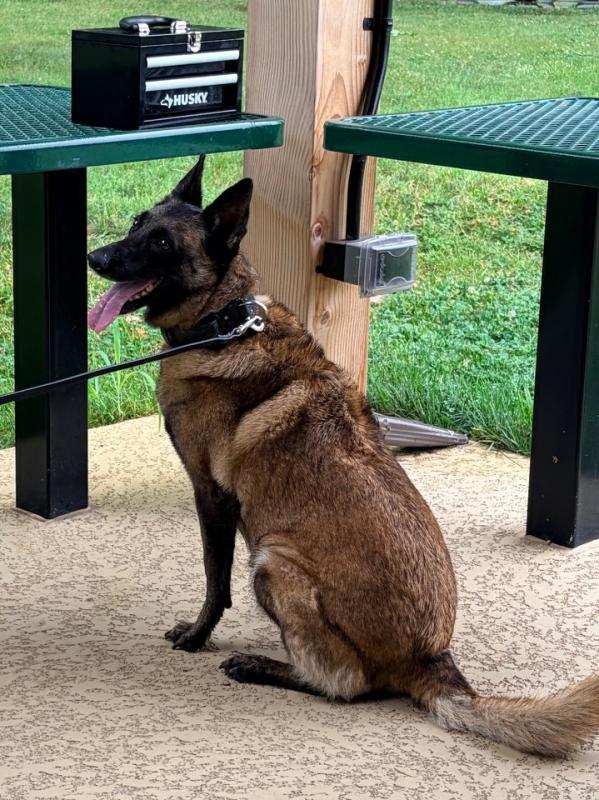
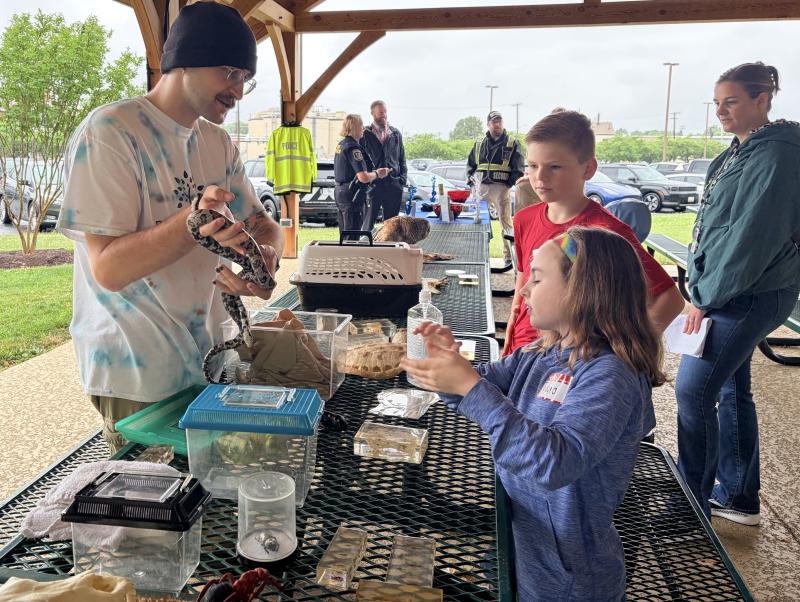
Participants returned to their favorite drop-in activities repeatedly. Despite the rain, many groups of colorful umbrellas bounced around to the nearby satellite activities throughout the day as well. These included a few scheduled demonstrations, like the NIH K-9 demo and an animal program from the local Fountain Rock Nature Center.
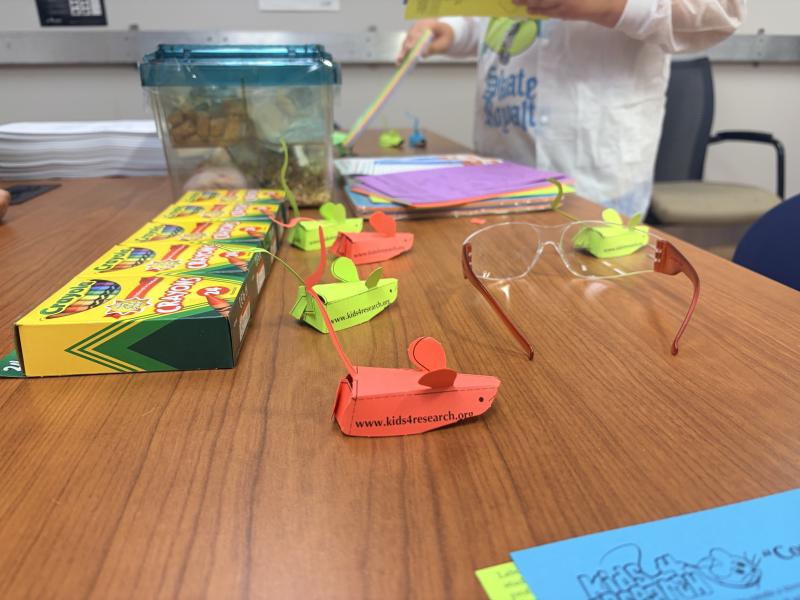
Additionally, a few laboratories hosted activities, like a program about nature-derived drugs with a tour of the Natural Products Repository, and a spotlight on zebrafish. The Laboratory Animal Sciences Program (LASP) offered a tour and had child-sized personal protective equipment (PPE) for kids to wear around the facility as well as themed crafts.
A Day of ‘Super Engaging’ Activities
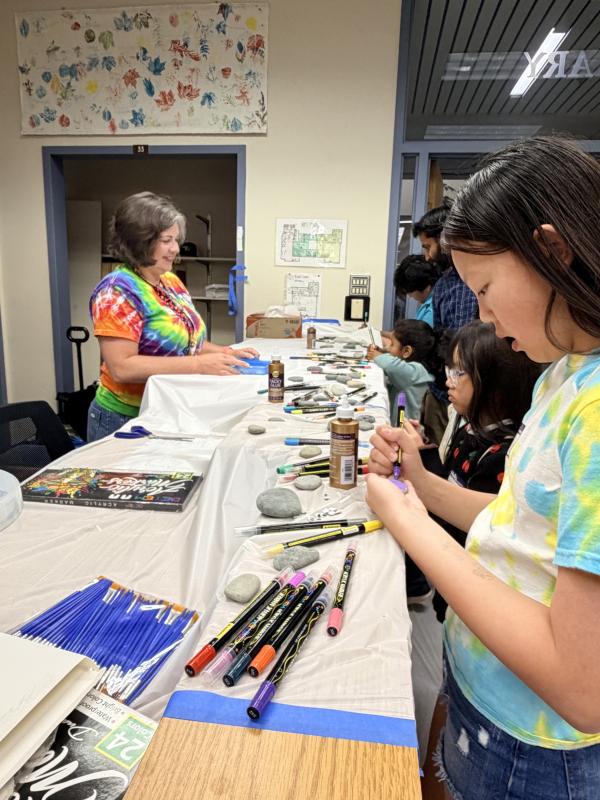
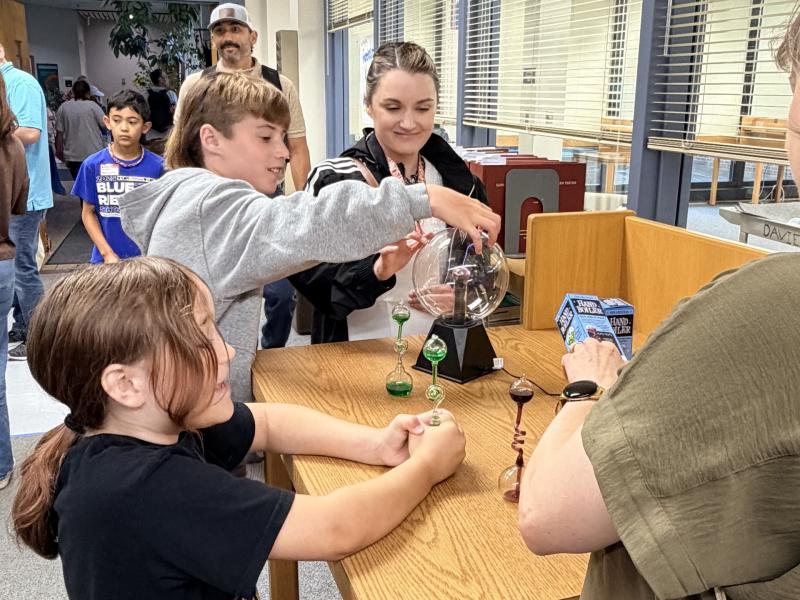
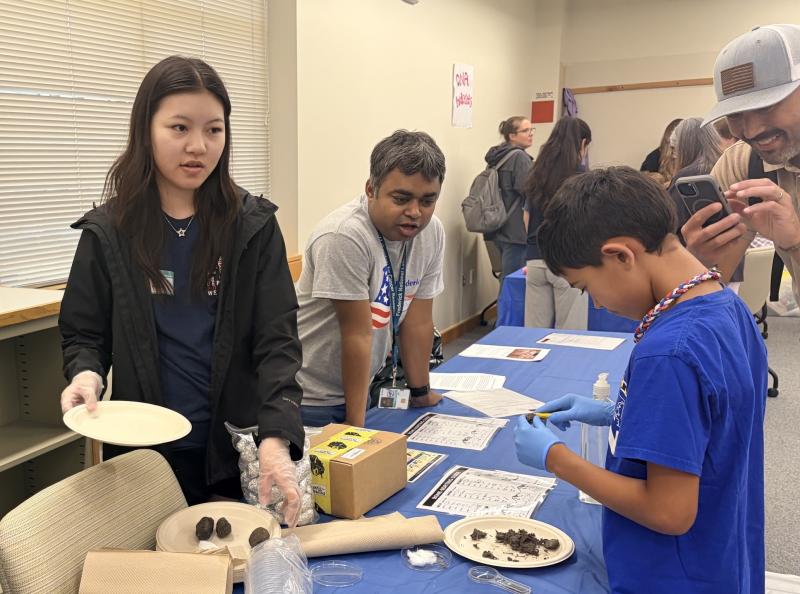
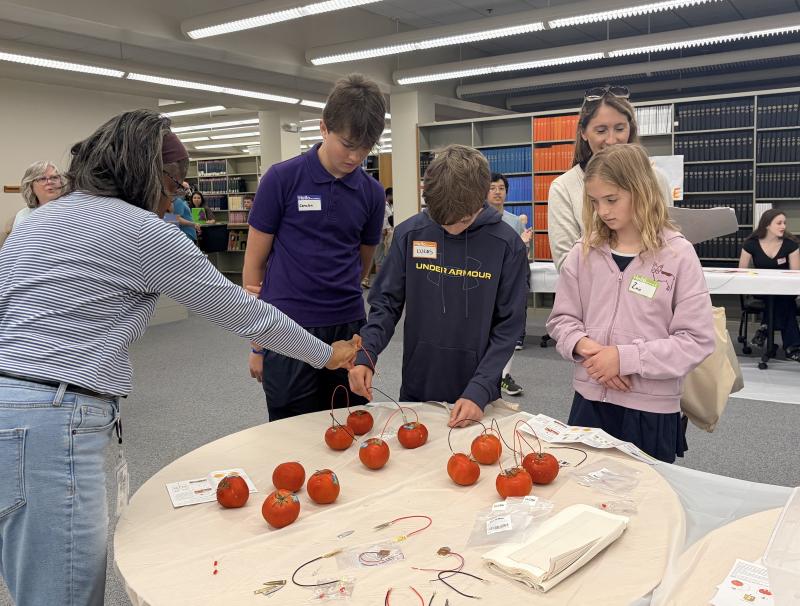
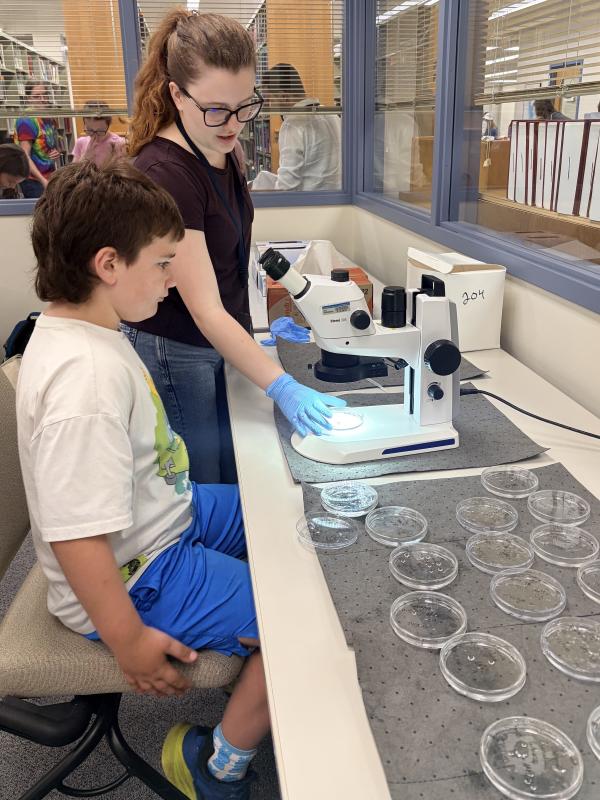
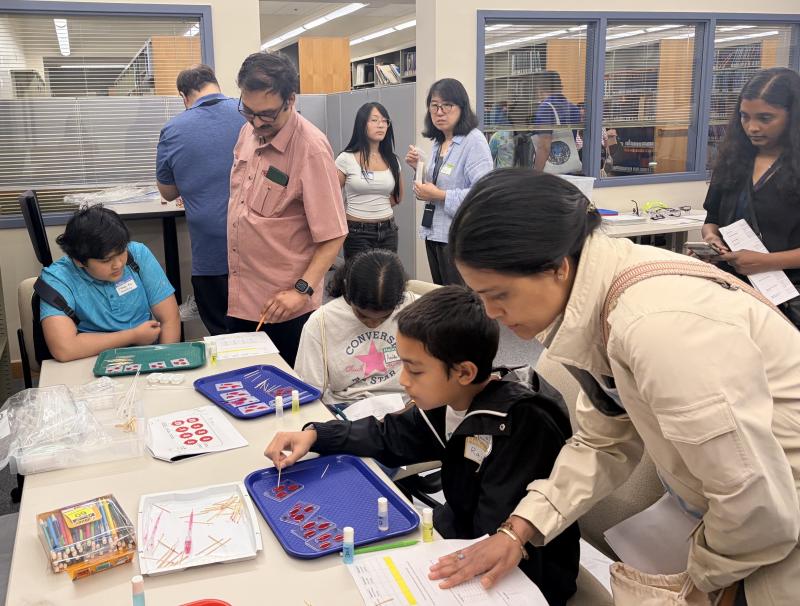
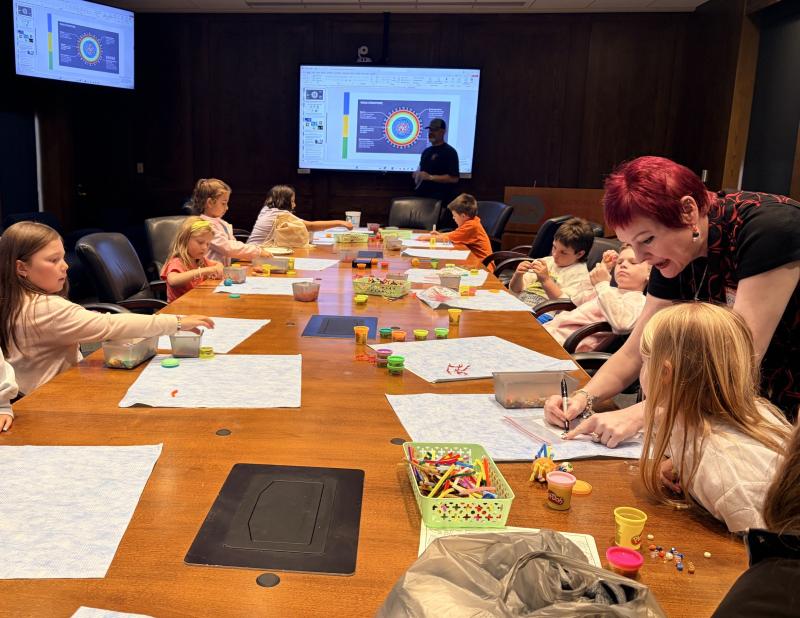
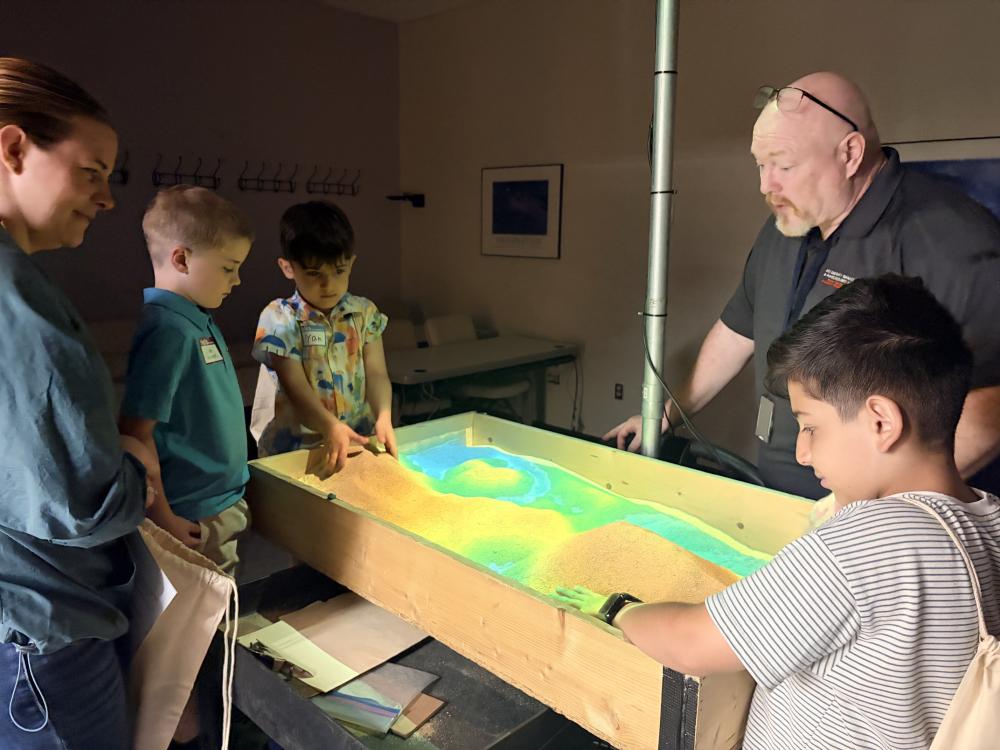
Most drop-in activities were hands-on, and the central space bustled all day with focused creators dissecting owl pellets and body part puzzles, making stress balls and DNA sequence bracelets, and learning about blood typing and medical equipment, among other things. Each of the activities was designed to inspire or teach participants about science and the natural world.
Tina Wang, a new contractor in the Contracts and Acquisitions Directorate, brought her two kids for the first time and was blown away by the offerings.
“They’ve done three or four experiments, and they completely love it,” she said of her kids. “It’s super engaging. … I'm learning so much, and everything is very ‘wow’ for them right now at this age.”
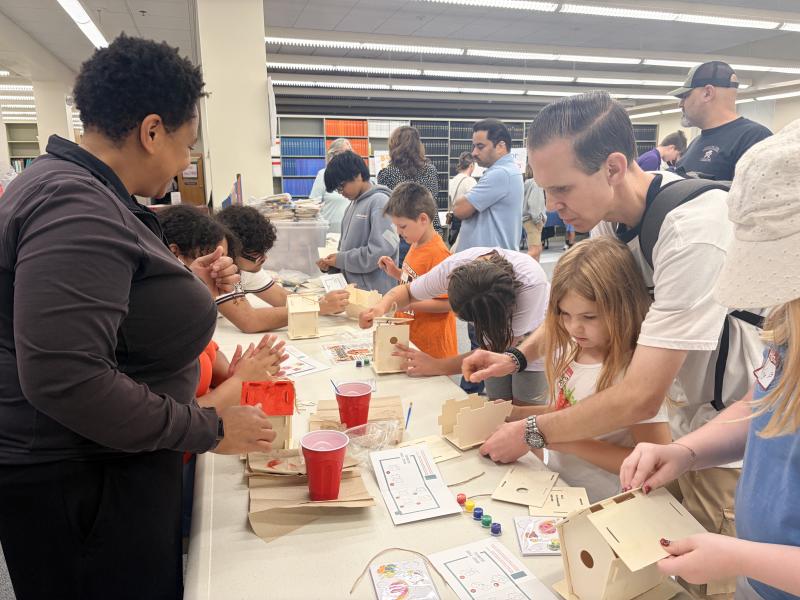
New activities this year included making miniature greenhouses and birdhouses to inspire kids about the natural world around them and using cabbage to learn about acids and bases, a primer on chemical compounds.
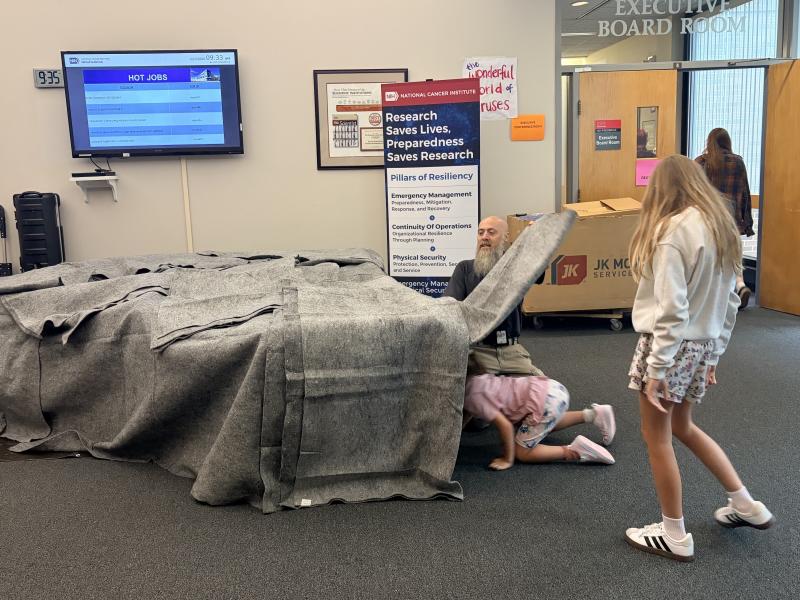
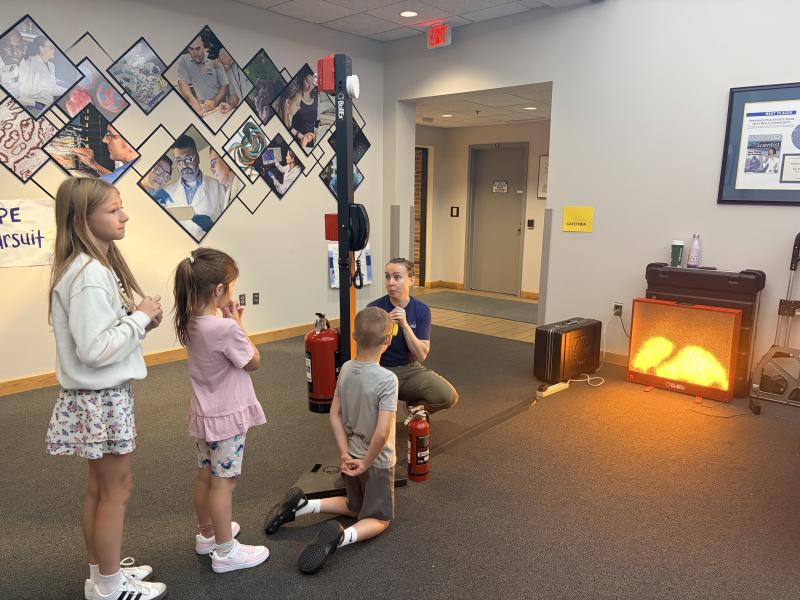
Longstanding favorites were back, like the Environment, Health, and Safety Directorate (EHS) fire safety station, where kids could learn about fire safety by crawling through a maze to simulate a smoke-filled room, making a practice 911 call, and using a fire extinguisher simulator.
This station, in a central area between the conference rooms, was visited more than once by multiple young patrons, with one guardian commenting to the EHS staff that “this is their favorite every year. They’re excited to volunteer to help with this station when they’re older.”
A Focus on Inspiring a Love of Science
Volunteers, of course, are what allows the popular event to happen. Staff are encouraged to volunteer to help run stations and registration for the event—and bring friends or family to volunteer if they’re interested, including non-employees, as long as they’re over the age of 14.
“Our event could not have happened without [volunteers’] time, energy, and enthusiasm. In supporting this day, they made a difference and created a wonderful day for children to enjoy,” said Bakhru.
The day is all about the kids, and the more volunteers are available, the more activities can be planned.
“Our greatest hope with any Take Your Child to Work Day event is to nurture a love of and appreciation for science. … We want every child to walk away feeling excited about something they learned, proud of something they made, or curious about how the important work we do at NIH impacts the scientific community, and the world at large,” said Bakhru.
If the smiles and chatter apparent as the event wound down are any indication, then for this year, it seems that mission was accomplished.
Karolina Wilk is a technical editor in SPGM, where she writes for NCI Frederick and Frederick National Laboratory’s news outlets and edits scientific manuscripts, corporate documentation, and other writing. SPGM is the creative services department and hub for editing, illustration, graphic design, formatting, and multimedia training and support.