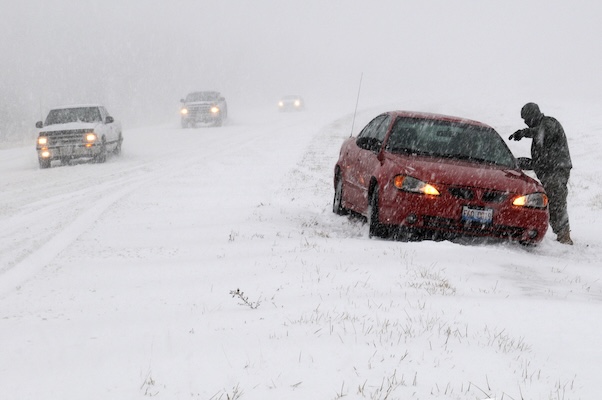



When snow or freezing rain starts to fall, Frederick’s roads can quickly shift from scenic to treacherous. Whether you’re driving a few miles or making a longer trek, winter weather can turn an ordinary commute into a dangerous situation, making it even more important to be prepared.
In Frederick County, about one third of workers travel outside the county for their jobs. On top of that, the average one-way commute is now approximately 35 minutes. Add in trips to the grocery store or other errands, family excursions, and holiday travel, and many of us spend substantial time on roads that become much more dangerous in winter.
Even a short delay on icy roads can become serious when temperatures drop. If you’re stuck because of a vehicle issue, traffic, or unexpected storm and the temperatures are freezing, the National Weather Service warns that “it only takes a few minutes for the cold to become life-threatening when you’re unprotected.”
Commuter Essentials: Safety Kit to Keep in Your Car This Winter
Consider packing a winter safety kit in your car in case of an emergency. If your car breaks down, traffic halts, or a storm hits unexpectedly, these are the items most likely to help you stay warm, safe, and visible until help arrives.
1. Warmth & Safety
- Blanket or Emergency Thermal Blanket: If you can’t run the heater, insulation is vital. Wrapping a reflective blanket around yourself can trap heat effectively. (LifeSecure)
- Extra Hat, Gloves, and Socks: A few spare layers can prevent hypothermia. This includes hats and hoods, as up to 40% of body heat is lost through the head. (Montgomery County MD Fire & Rescue Service)
- Hand Warmers or Toe Warmers: Compact heat packs make waiting in the cold more tolerable. (AgileRates)
- Flashlight or Lantern: Keep a flashlight, headlamp, or battery-powered lantern to help with lighting as needed, especially if you’re stuck at night or need to signal for help. (LifeSecure)
2. Food, Water & Communication
- Water and High-Energy Snacks: Hydration and energy are crucial during long waits or periods stranded by weather or traffic. A small supply of drinking water, as well as some nonperishable high-energy snacks like granola bars or trail mix, is essential. Be sure to store your emergency water in plastic bottles, as glass can shatter if it freezes in cold weather. Resupply every season to ensure freshness. (The Zebra)
- First Aid Kit and Prescription Medications: Keep a first aid kit in your car and bring a small supply of basic medicines and prescriptions with you in case you get stranded when you’re traveling in winter weather. Store medications in a small, insulated pouch to protect them from degradation due to temperature fluctuations. (AAA)
- Backup Contact Sheet & Phone Charger: If your phone dies or you lose signal, a written list of contacts can help first responders communicate with your loved ones in an emergency. (AAA)
3. Vehicle Readiness
- Ice Scraper and Snow Brush: These are essential for cleaning your car and maintaining visibility for your commute. Being able to see clearly through your windshield and windows increases your safety. (Consumer Reports)
- Jumper Cables or Portable Jump Starter: Batteries fail faster in the cold, so don’t get stuck where you are. (Consumer Reports)
- Sand, Cat Litter, or Traction Mats: If your car is stuck on an icy patch, spreading one of these on the ground can help create traction to stop your tires from spinning. (Almanac)
- Reflective Triangles or Flashing Light: These make your vehicle more visible to other drivers and emergency responders if you’re pulled over at night, in a storm, or in low-visibility conditions. (AAA)
Carbon Monoxide Caution
If you’re stranded in snow or traffic, it may be tempting to keep the engine running for warmth. However, prolonged idling without occasionally letting in fresh air can allow carbon monoxide to build up, particularly if the exhaust pipe is blocked by snow.
Clear snow from the tailpipe regularly, crack a window slightly, and run the engine for short intervals to stay safe. (CDC)
Quick Tips Before You Hit the Road
Aside from keeping a winter safety kit in your car, you should prioritize a few car maintenance tasks in the colder months:
- Keep your gas tank at least half full to prevent the fuel line from freezing. (Ready.gov)
- Use winter-grade windshield washer fluid and replace old wiper blades to prevent the fluid from freezing on your windshield and to decrease the chance of your blades slipping. (Traffic Safety Store)
- Check your battery, tires, and antifreeze before temperatures drop to keep your car road-ready. (Ready.gov)
- Drive with extra care. Take your time and avoid sudden steering, braking, or accelerating. Assume other drivers may be less cautious or experienced in winter conditions.
When you’re prepared, you can stay safe and focus on enjoying the winter weather this season.
Sarah Hooper is the occupational health manager at Occupational Health Services, where she leads her team as they focus on keeping people safe and healthy within their work environment.