People

Moving to NCI at Frederick from Overseas, Part 1: Joining the Community

A young scientist from outside the United States says she had many expectations after learning she’d been hired for a postdoctoral fellowship at the National Cancer Institute. Being unable to find housing wasn’t one of them—but that’s where she and her family ended up three weeks after arriving in the U.S. For many foreign fellows, coming to work at the National Institutes of Health is the opportunity of a lifetime and a thrilling new adventure. But the difficulties of starting fresh in a new country also make it incredibly stressful and daunting.

Where Are They Now: Amanda Corbel Finds Her Perfect Match

By her own admission, Amanda Corbel is a people person. She enjoys interacting with others and collaborating on new and exciting projects. But she is also passionate about science. Corbel completed four internships at the National Cancer Institute while earning her bachelor’s degree in biology from Shepherd University, followed them up with a postbaccalaureate fellowship, and co-authored five publications.

Science Thrives in Welcoming, Collegial Chemical Biology Laboratory

Euna Yoo, Ph.D., has found what she calls “the perfect place” to begin her career as an independent researcher—the Chemical Biology Laboratory at NCI at Frederick. The 11-year-old laboratory is an internationally recognized program that performs basic science to develop and apply chemical tools, methods, and materials to understand and alter biological processes involved in cancer and AIDS.

Memorial Lecture to Honor One Scientist’s Legacy and Another’s Accomplishments

On November 19, an internationally renowned virologist will visit NCI at Frederick to deliver a lecture in the Building 549 auditorium. Beatrice Hahn, M.D., was invited by the NCI HIV Dynamics and Replication Program, which is hosting her as the speaker and recipient of the Eighth Annual David Derse Memorial Lecture and Award.

Portrait of a Crystallographer

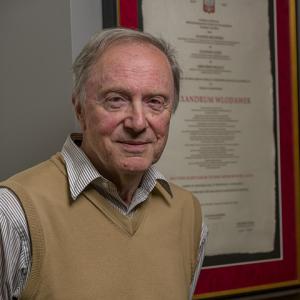
Alexander Wlodawer, Ph.D., displays a family tree on the wall near his office, but none of his relatives appear among its branches. In fact, with a few exceptions, the people listed on it aren’t genetically related to each other. Instead, it’s the Family Tree of Crystallography, a who-trained-who of famous scientists that extends back to the first crystallographic experiment in 1913.