Science & Technology

NCI Scientists Get Deep Look at CRISPR Complex Through Deep Freeze

To get a closer look at one CRISPR complex, researchers from NCI’s Center for Cancer Research and their collaborators recently put it “on ice” with cryo-electron microscopy, creating highly detailed images that show its biological structures in multiple states at a molecular level.

Forum on Emerging Infectious Diseases Highlights Leading-Edge Research

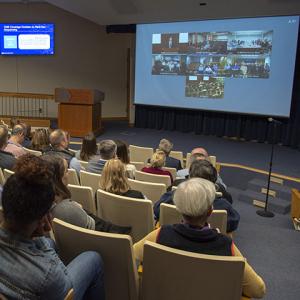
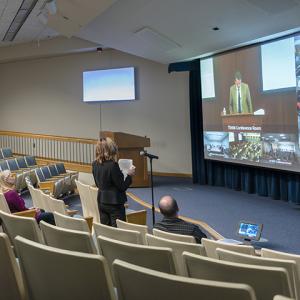
Scientists and professionals from multiple governmental agencies recently gathered at NCI at Frederick for a forum on newly emerging infectious diseases, threats to public health, and ongoing efforts to study high-risk pathogens. During the one-day event, which was sponsored by the National Interagency Confederation for Biological Research’s Scientific Interaction Subcommittee, nine speakers from four agencies shared their research and their agencies’ endeavors to address current and future biological threats.

Novel 3-D Computer Model Can Help Predict Pathogens’ Roles in Cancer

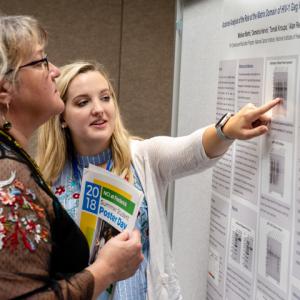
To understand how bacterial and viral infections contribute to human cancers, four NCI at Frederick scientists turned not to the lab bench, but to a computer. The team has created the world’s first—and currently, only—3-D computational approach for studying interactions between pathogen proteins and human proteins based on a molecular adaptation known as interface mimicry.

Frederick National Laboratory Advisory Committee Welcomes New FNL, NCI Leaders

The Frederick National Laboratory Advisory Committee recently met to discuss the future of several high-profile Frederick National Lab initiatives in a meeting that included a chance to meet the new NCI and FNLCR leaders. Here is a look at a few of the highlights from the last of the 2017 FNLAC meetings.

Second RAS Symposium Brings Together World’s Leading RAS Scientists

From December 6–8, the Advanced Technology Research Facility of the Frederick National Laboratory for Cancer Research was abuzz with conversation and collaboration as nearly 450 scientists, academics, and industry partners gathered for the Second RAS Initiative Symposium. Attendees hailed from 14 nations, dozens of institutions, and diverse scientific backgrounds, but they shared a common purpose: to present and discuss their research on RAS genes and cancer.