Science & Technology

NCI Helps Children’s Hospital of Philadelphia to Identify and Treat New Target in Pediatric Cancer

There may be a new, more effective method for treating high-risk neuroblastoma, according to scientists at the Children’s Hospital of Philadelphia and collaborators in the Cancer and Inflammation Program at NCI at Frederick. Together, the groups published a study describing a previously unrecognized protein on neuroblastoma cells, called GPC2, as well as the creation of a novel antibody-drug conjugate, a combination of a human antibody and a naturally occurring anticancer drug, that locates and binds to GPC2 in a highly efficient way.

NIH–Lacks Family Partnership Gives Henrietta Lacks’ Descendants a Seat at the Table

The NIH Bethesda campus recently welcomed several special guests for a presentation titled Given a Voice: Update on the NIH–Lacks Family Partnership. Henrietta Lacks’ grandchildren Jeri Lacks-Whye (who is also the Lacks family spokesperson) and David Lacks, Jr. came to speak with NIH Director Francis S. Collins, Ph.D., M.D. about the importance of protecting patients and their families.

Student Poster Days Showcase Young Researchers

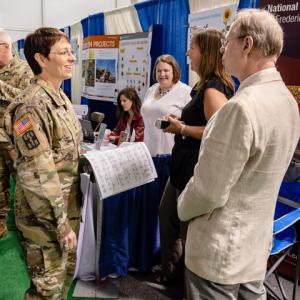
Student interns presented their research to the NCI at Frederick community during the annual Student Poster Days event, held in the Building 549 lobby and the Advanced Technology Research Facility (ATRF) atrium over two days.

NCI Scientists Create New Assay, Identify Novel Therapeutic Compounds, and Take Places on Front Lines of Cancer Research

A team of scientists and specialists from NCI at Frederick, NCI at Bethesda, the Frederick National Laboratory for Cancer Research, and Data Management Services, Inc., has developed the first method for identifying natural products that could increase the effectiveness of camptothecin-based cancer treatments.

NCI, FNLCR Help Launch Pediatric MATCH Precision Medicine Trial

The National Cancer Institute and Children’s Oncology Group recently opened enrollment for a new Phase II trial of personalized precision cancer therapies. Called the Pediatric Molecular Analysis for Therapy Choice (Pediatric MATCH), the trial seeks to treat children and adolescents aged 1­–21 whose solid tumors have failed to respond to or re-emerged after traditional cancer treatments.