


Editor’s note: This is the third installment in our series recognizing the legacy of the NCI Frederick Scientific Library and is part of a miniseries about the library’s history. Lisa Simpson contributed reporting to this article.
As the 1990s arrived, the Scientific Library at NCI Frederick was a day-and-night operation, a bustling nexus of information and resources. While the next 30 years would bring major changes to operations and resources alike, the library wouldn’t lose its stride.
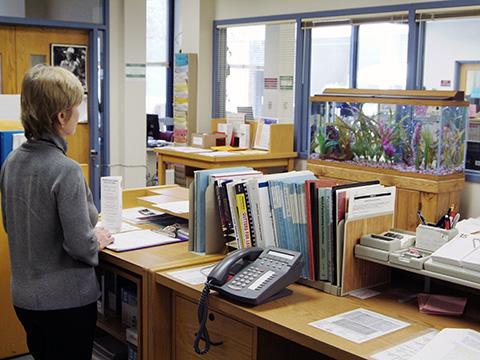
By the middle of the decade, the library managed subscriptions to around 600 scientific periodicals, with an estimated 80–100 new issues arriving daily, said Pam Noble, a library technician who joined the Scientific Library as the serials technician in 1991. The collection became so large that the staff began storing issues behind the circulation desk and anywhere else they could find room.
Construction to add much-needed space began in late 1994, just eight years after the collection moved to Building 549. The massive project took barely over a year and more than doubled the Scientific Library’s square footage, enough that later records from 2003 show the shelves contained over 44,000 volumes of periodicals—a nearly tenfold increase over the collection the library inherited from the Army in 1972.
Through it all, the library’s services stayed in high demand. Patrons perused so many periodicals and books per day that the staff members assigned to reshelve the materials often had to manage four or five cartloads each, said Derdev Battsetseg, a library technician who started as an aide and clerk in the 1990s.
“We had lots of people that time at the library, and many scientists used to come to make a photocopy of the [periodical] articles. So, there was a line even to photocopy,” Battsetseg said.
The Charge into Cyberspace
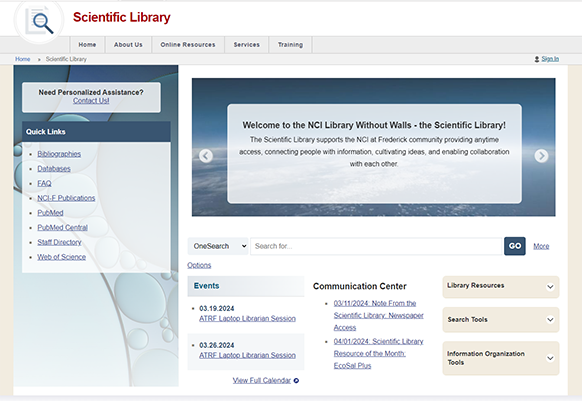
As access to the Internet became commonplace, the library staff capitalized on what cyberspace made possible. In 1995, they single-handedly designed and launched the library’s webpage, one of the first sites at NCI Frederick, if not the first. Soon, the team was taking online requests for periodical articles.
“We never were behind the curve with that,” Noble recalls of the library’s Internet services.
The periodical collection started to change in April 1997, when the library acquired its first online subscription to a scientific publication, the Journal of Biological Chemistry. For the first time, NCI Frederick scientists and staff could access new articles on a computer screen. By the following year, they could read the top 20 scientific journals online.
Meanwhile, the library staff integrated other technology into their services: new databases, laser printers, color copiers, the Technology Training Lab, and all manner of capabilities involving CD-ROMs, among others. The record of innovations the Scientific Library adopted between 1993 and 2002 alone is two pages long.
Sometimes the technology could be hard to navigate, but the library staff helped NCI Frederick employees adapt through classes or personal assistance.
“You absolutely had to have a librarian to do a database search in some of the databases we had. … There were lot more clunky searches, not like it is today, where you can put in some keywords and a lot of good stuff comes up,” said librarian Alan Doss.
Cornerstone of Events and Education
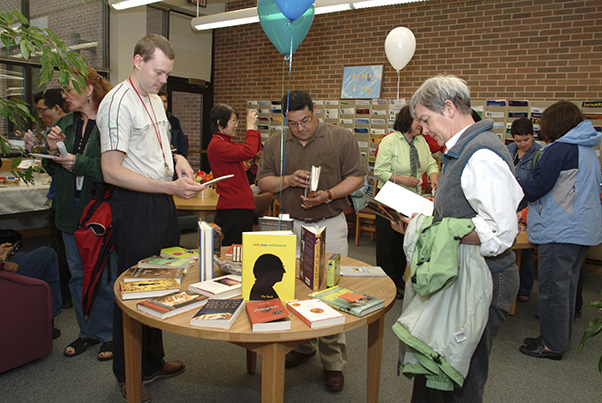
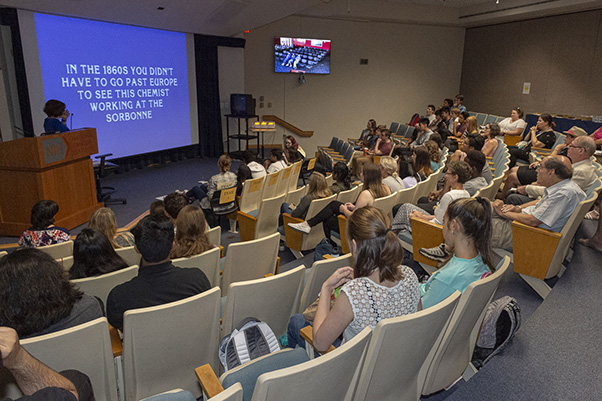
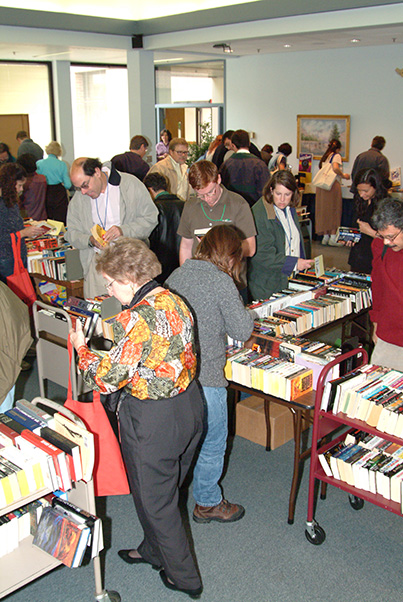
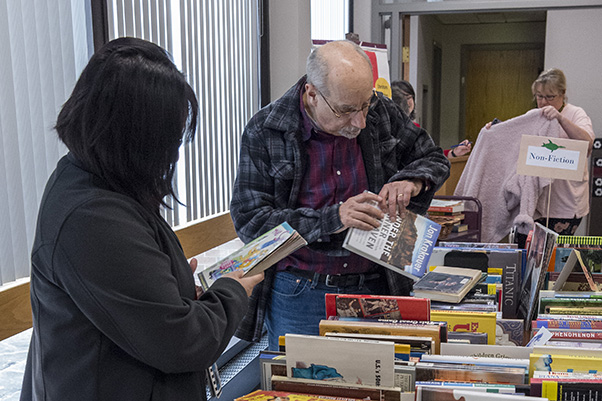
The library’s efforts to connect with staff and foster a sense of community were equally expansive during the 1990s and into the 21st century. The staff hosted a booth at the first Spring Research Festival and participated in the first Children’s Day, the precursor to Take Your Child to Work Day, in 1997. The popular Science in the Cinema and Scientific Library Theater series, held around the turn of the millennium, screened movies and TV shows and invited a qualified researcher to lecture on the relevant scientific principles they depicted.
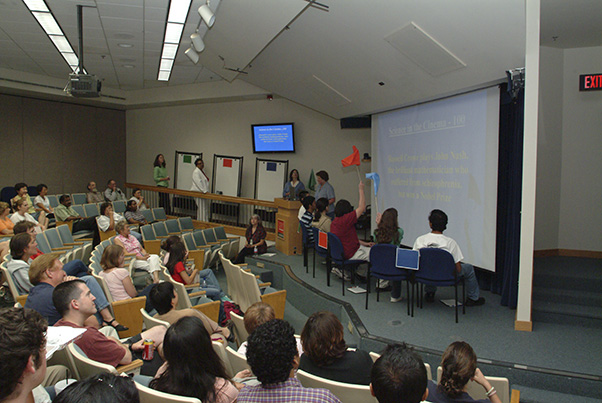
As NCI Frederick’s budding Werner H. Kirsten Student Intern Program gained momentum, library employees mentored participating high schoolers. Robin Meckley, then public services librarian, also launched the Student Science Jeopardy! Tournament in 2007, in which interns vied to show who knew the most science trivia. The event became a much-anticipated annual tradition, beloved for fostering scientific education and provoking friendly competition.
Several of these efforts remained library mainstays through the 2010s and into the 2020s. Others, such as the movie series, changed or took new forms. Most missed only a few years due to the COVID-19 pandemic, a testament to their endurance and popularity.
A Singular Resource
With its large collection and access to hundreds of journals and databases online, the Scientific Library stood as a one-of-a-kind institution in the 21st century. Few other libraries maintained an equally keen, narrow focus on cancer research.
“I think at one time that you could probably say we had the most comprehensive cancer collection in the in the world,” Noble said.
Yet in-person visits grew less frequent as more of the collection became available via the Internet. Instead, patrons used the library’s online subscriptions to read and print the latest studies from their labs or offices.
In turn, the library evolved yet again, investing in services that augmented its collection’s accessibility. In 2013, the staff launched OneSearch on the Scientific Library website: a search tool that trawled every digital item in the collection—periodicals, e-books, databases, and others—for information pertaining to a user’s query.
It was “kind of Google-like” in its scope, Doss said, “but bringing in only library resources.”
Librarians also hosted classes and seminars on scientific topics, data analysis, and database navigation to help patrons leverage the resources available to them.
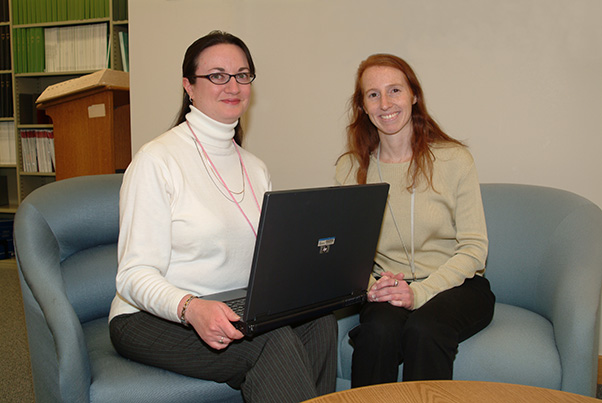
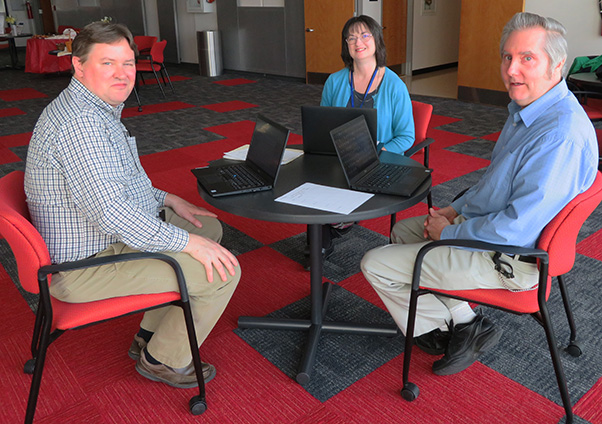
At the same time, the librarians went into the NCI Frederick community to help employees who couldn’t visit Building 549. Part of this came with the 2012 opening of a library branch in the Advanced Technology Research Facility but was also reflected in the Laptop Librarian (later, iLibrarian) Program, begun in 2008, where librarians staffed mobile information stations and eventually integrated into different scientific groups, offered guidance, and performed on-the-spot support services tailored to their individual needs.
Fifty-Three Years Supporting Progress
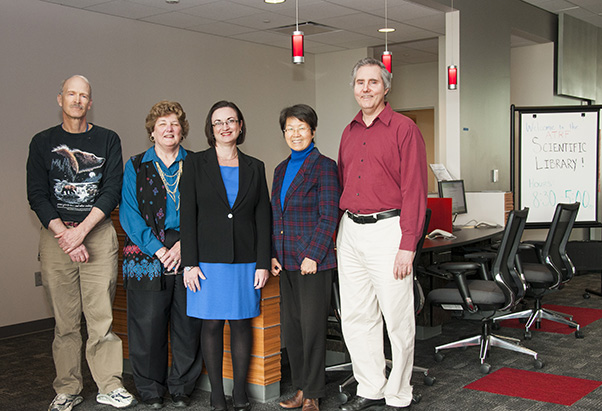
The Scientific Library’s final chapter arrived in 2024. With most of the collection available digitally, the library staff began transitioning to the Library Without Walls operating model. The physical library in Building 549 gradually shut down, and the staff turned their efforts to online support and direct assistance in the employee community.
This was a major departure from the library’s traditional operations—and even then, it wouldn’t be fully realized, as a change in plans closed the library altogether in August 2025.
Still, the arrangements for this last, drastic evolution bore the same mission and unflagging ambitions as the first accession letter sent in 1973: better connection with and service to researchers striving to improve human health, no matter where they were.
“It’s never been just about access to information—it’s been about service, adaptability, and supporting scientific progress,” Battsetseg said.
Samuel Lopez leads the editorial team in Scientific Publications, Graphics & Media (SPGM). He writes for newsletters; informally serves as an institutional historian; and edits scientific manuscripts, corporate documents, and sundry other written media. SPGM is the creative services department and hub for editing, illustration, graphic design, formatting, and multimedia.
Read other parts of the series: