History

(Updated) Echoes from the Past: Life and Times of a Scientific Library, Part 2

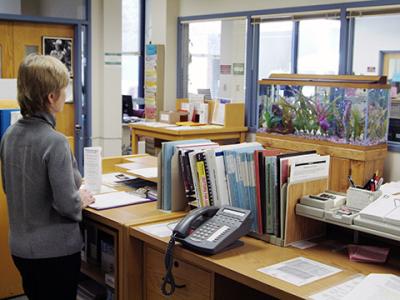
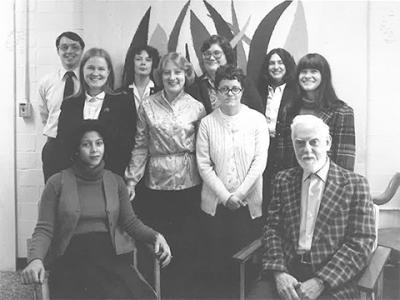
The Scientific Library employees at NCI’s Frederick Cancer Research Center repeated history in 1972, perhaps without realizing it. Much like the librarians who opened the Camp Detrick Technical Library in 1943, they were among the first staff to begin working at the epicenter of what would soon become an important scientific facility. And like in the early days of Camp Detrick, the Scientific Library rapidly became a hub for information and technology during the FCRC’s first years.

Echoes from the Past: Life and Times of a Scientific Library, Part 1

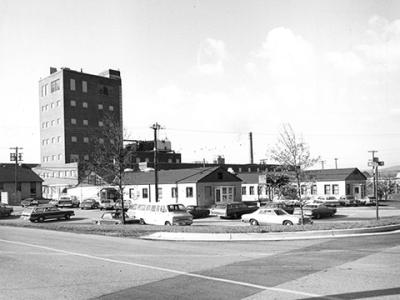
While World War II raged, engineers and tradespeople built up a little airport that’d sat humbly on the outskirts of Frederick since 1929, transforming it into a microbiological research facility. The site, renamed “Camp Detrick,” was to be the home of the new U.S. Army Biowarfare Research Laboratories. This is where the story of the NCI Frederick Scientific Library truly begins.

Echoes from the Past: Frederick Made It Possible to Implement the First Blood Test for HIV

On April 9, 1984, a special package from Bethesda arrived at Building 560 on the Frederick Cancer Research Facility (FCRF) campus. In an unusual move, it came not by courier but by scientist, who carried it directly to a biosafety level 3 (BSL-3) laboratory, at the time one of FCRF’s few facilities for working with highly dangerous biological entities. Exposure to the box’s contents meant likelihood of a protracted death. Julian Bess Jr. remembers when Larry Arthur, Ph.D., brought that box containing two sealed flasks of HIV-infected cells into their laboratory.

Echoes From the Past: Frederick Opens Its First Major Manufacturing Operation

In spring 1976, Building 472 at Frederick Cancer Research Center (FCRC) buzzed with activity as crews delivered and installed scientific equipment. Girded by steam pipes and bounded on one side by a narrow, one-lane road, the hulking brick structure had been among those vacated when the biowarfare program at Fort Detrick—its previous occupant—shut down. But its new life was about to begin.

Echoes from the Past: Negotiations Lead to Critical Land Transfer

The bureaucracy of Fort Detrick had transitioned from death to life. So said the Washington Post in October 1971, when President Richard M. Nixon converted the Army base’s old biowarfare laboratories into a center for life-saving cancer research. Many observers agreed it was an ambitious, hopeful vision. But what they didn’t know is that representatives from the Department of Defense and the Department of Health, Education, and Welfare (HEW) had been working on the transition for months.