Science & Technology

Poster Quick Takes: New Tool Lets Scientists Easily Profile Difficult Glycans

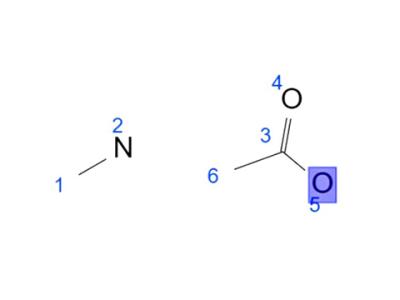
Tools developed by chemists at NCI Frederick have at last made it possible to see how some of the most common molecules affect cells’ behavior in cancer and disease. Studying these molecules, glycans, because they can’t directly be sequenced, has been challenging. New research from NCI Frederick’s Chemical Biology Laboratory (CBL) may make it easier.

Poster Quick Takes: Cells Use Particles to Trash Defective RNA

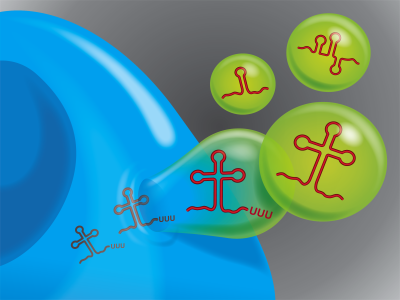
A study originating in NCI Frederick’s RNA Biology Laboratory has clarified why cells pack up and discard a certain type of RNA. Put simply, it’s a trash removal system meant to keep cells stable—and it’s relevant to cancer growth. The findings, published in the Proceedings of the National Academy of Sciences, came by examining the RNAs within extracellular vesicles.

Poster Trivia

Poster shares stories about science and community at NCI Frederick, meant to inform and entertain. Now, we invite you to have fun while testing your knowledge with the new Poster trivia challenge.

Leading by Example: Two Researchers Encourage Green Laboratory Practices

Two scientists at different stages of their careers are driving environmentally friendly changes in their labs and inspiring others to make changes toward sustainability. For both Ru-ching Hsia, Ph.D., principal scientist in the Electron Microscopy Core (EMC), and Thomas Abney-Lidahl, postbaccalaureate fellow in the HIV Dynamics and Replication Program, “green” practices are a top priority and personal mission guided by their experience and witnessing the benefits at other institutions.

Self-Assembling 3D Mini-Tumors Are Poised to Become a New Tool for Studying Cancer

Bioengineers at NCI Frederick and Frederick National Laboratory for Cancer Research, with external collaborators, have devised new types of 3D miniature tissues that assemble themselves and better reflect the composition of tumors in the body compared to existing models. The team aimed to complement organoids, a class of expensive, human-like models. Their creation, dubbed “MatriSpheres,” offers an inexpensive, middle-ground platform but, unexpectedly, also includes features that are unique from organoids.